News

News 2020-09-18T12:53:42+00:00

Health Center, Child Care, Affordable Homes Planned To Bring ‘Opportunities For Economic Growth’ To West Side

By Pascal Sabino, Block Club Chicago  |  February 18th, 2021   (Click here for Original Article)
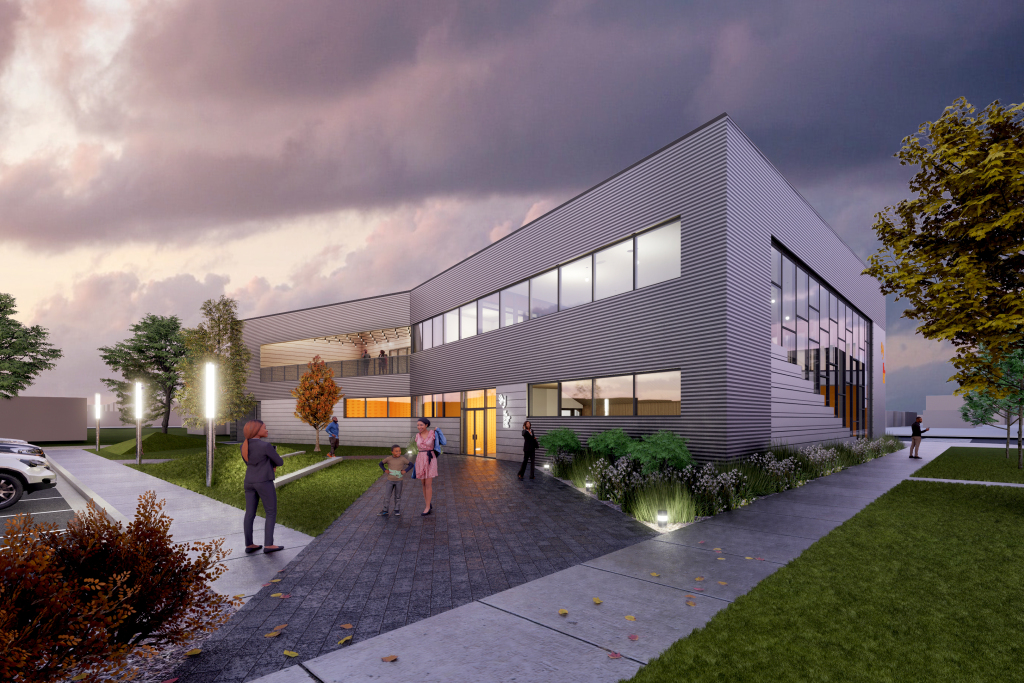
AUSTIN — Neighborhood groups want to transform vacant lots on the West Side into community facilities that will provide housing, health and career services for children and families.
The project is part of the ASPIRE Initiative, an effort to invest in local assets so Austin residents of all ages will have access to education and economic opportunities. The initiative, which aims to create a cradle-to-career pipeline in the area, implements several of the strategies outlined in the Austin Quality-of-Life Plan for achieving resident-driven improvements to the neighborhood.
The planned transformation of the vacant lots is a collaboration among By the Hand, the Cook County Land Bank and neighborhood groups Austin Coming Together and Westside Health Authority. Organizers want to build affordable housing, a community health center, and an early childhood development campus over the next two to three years.
Most of the lots have already been acquired for the project with support from the Cook County Land Bank.
The project will address “the housing needs, the employment needs and the health needs” that many working class people are currently struggling with Austin, said Morris Reed, Westside Health Authority executive director.
Many residents have left the West Side in recent years to find better opportunities, Reed said.
“Our goal is to not only retain them, but also attract more professional and working-class African American families to build their wealth and see opportunities for economic growth here on the West Side,” Reed said. “We don’t want to see the neighborhood gentrify. We want to see the neighborhood grow with the residents we have.”
Westside Health Authority’s 100 Men 100 Homes program, which employs young men and trains them with the skills to restore their own community, will help build 30 affordable homes.
Construction will “involve local contractors and young men [who will be] mentored while they work on construction sites,” Reed said.
The housing component will promote homeownership among legacy Austin residents so they will have more pathways toward generational wealth.
“What we’re excited about with the housing is putting quality housing stock into hands prepared for homeownership. Not renting, homeownership. Wealth creation,” said Donnita Travis, founder of By the Hand Club for Kids.
The early childhood center will have programs for children up to age 4 so neighborhood kids will be able to hit the ground running when they get to kindergarten, Travis said. It will also have facilities designated for after-school programs and for social-emotional learning, Travis said.
The ASPIRE Initiative also involves redeveloping Emmet Elementary School, closed by the city in 2013, into a center for workforce development, job training and vocational education. Other parts of the project would invest more resources into Austin College and Career Academy.
Each component of the project is designed to have a catalytic effect by supporting other parts. The childhood center will create a continuum of support that will magnify the impact of the initiative’s investments in job readiness, Travis said.
“That’s important not only to improve educational opportunities within the neighborhood, but also, parents who want to go to work or want to go over to Emmett for job training, they obviously need high-quality child care,” Travis said.
The proposed health center will include exercise rooms and recreation areas that can be used for after-school programs, Travis said. The facility will benefit all residents in the area to “really allow people to age in place and have a healthy life,” she said.
“A healthy life means, a healthy education, a healthy body, a healthy home, a healthy job and, you know, to make sure that people can do that right there in Austin and not have to move somewhere else to do it,” Travis said.
March 3rd, 2021|Categories: News Articles, News articles on CCLBA|Comments Off on Health Center, Child Care, Affordable Homes Planned To Bring ‘Opportunities For Economic Growth’ To West Side

After Two Years Of Work, Englewood Leaders Unveiling First ‘Buy The Block’ Renovated Home In Community Reveal

By Jamie Nesbitt Golden, Block Club Chicago  |  December 23rd, 2020   (Click here for Original Article)
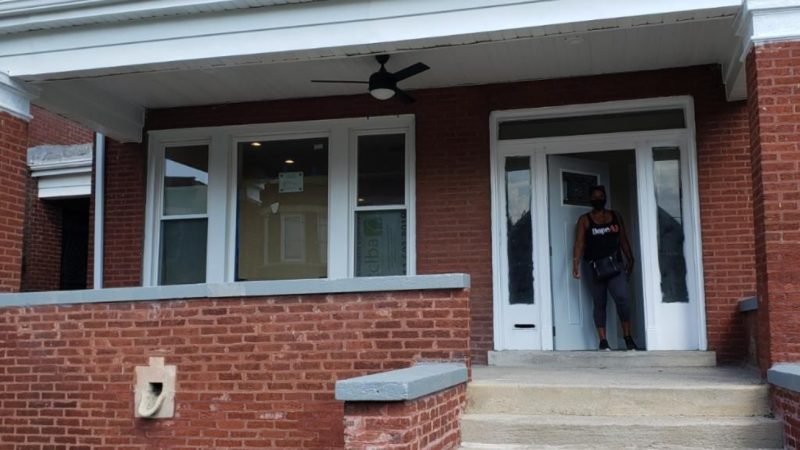
Englewood neighbors can get a first look at a new house this weekend, the product of a community initiative seeking to help more residents become homeowners.
The virtual community reveal is 10:30 a.m.-noon Sunday.
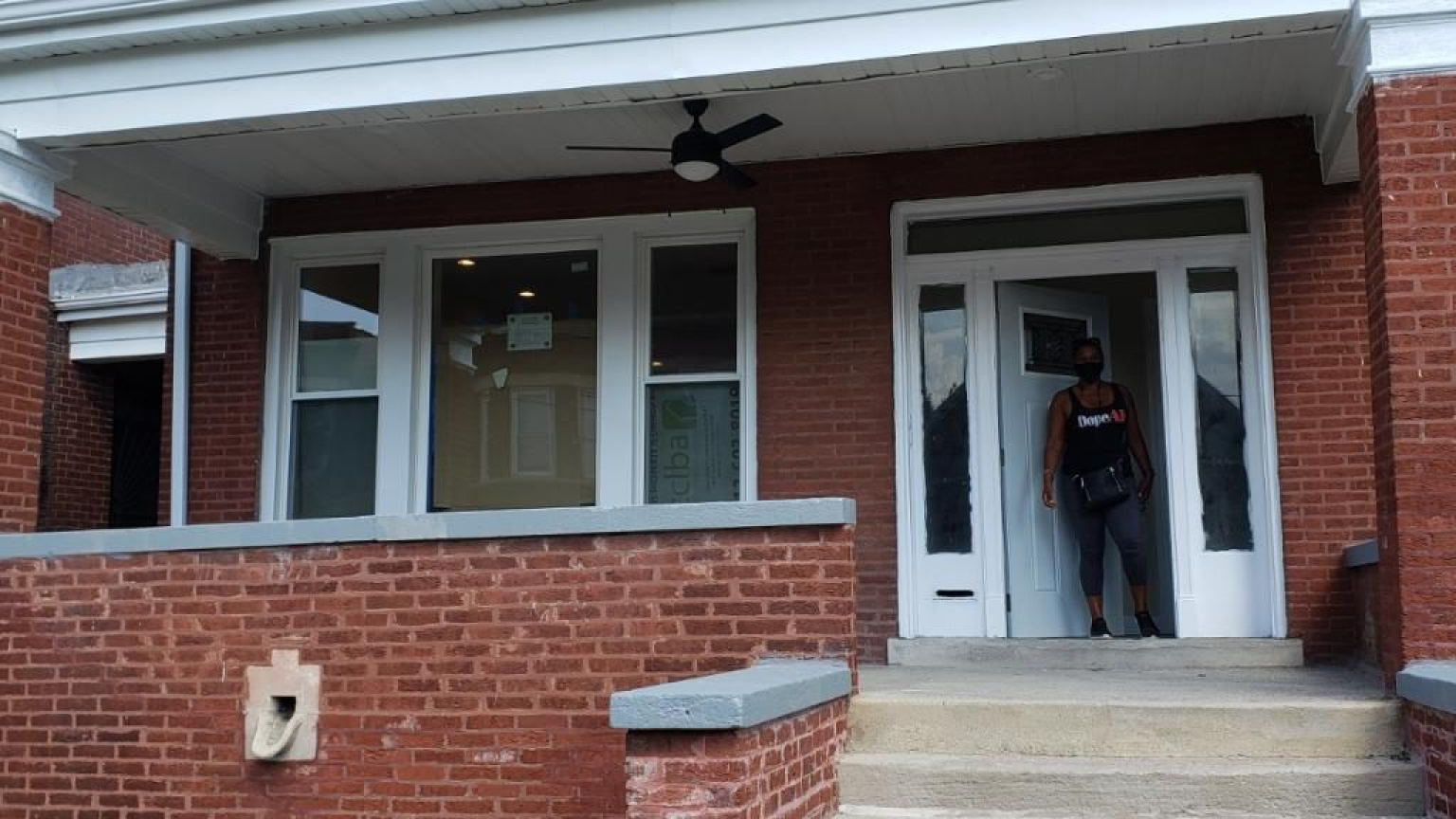
The red brick two-flat at 6219 S. Bishop Ave. is a two-year-long “buy the block” renovation project spearheaded by the Englewood Development Group, a collective formed by R.A.G.E. Founder Asiaha Butler and E.G. Woode’s Deon Lucas.
Potential buyers would have to live in the home, which will go on the market for $199,000.
In addition to getting a first look at the house, attendees at the virtual event can learn the ins and outs of the home buying process and can ask questions about capital and lending.
Butler is cohosting the virtual unveiling with EXIT Strategy Realtor Cassandra Sneed. There’s still time to register. Englewood residents will be given first priority.
That Sunday’s event falls on the second day of Kwanzaa, Kujichagulia, is apropos, added Butler, as it took two years of grit and self-determination to complete the project.
“Sometimes, people have to see something to believe in it. I wanted to show that this is possible,” Butler said. “The community reveal is an opportunity to learn about the concept, that was really my brainchild, and for first time home buyers looking to take that first step.”
Butler and Lucas originally bought the property from the Cook County Land Bank for $10,000. Renovations cost about $140,000.
January 13th, 2021|Categories: News Articles, News articles on CCLBA|Comments Off on After Two Years Of Work, Englewood Leaders Unveiling First ‘Buy The Block’ Renovated Home In Community Reveal

Animal Care League Expands Shelter for Homeless Animals with Building Purchase

By Stacey Sheridan, The Wednesday Journal of Oak Park  |  October 5th, 2020   (Click here for Original Article)
After over 10 arduous years of trying, the Animal Care League (ACL) has successfully purchased the dilapidated building at 1009 Garfield St., which sits directly between three other ACL-owned properties.
Once renovated, the building will serve as an extension of the ACL’s animal adoption and care services.
“It’ll be a part of our whole operation,” said Chatka Ruggiero, longtime ACL board member, who was instrumental in the purchasing process.
ACL will join the fourth building to the others by constructing a covered walkway which will allow people to easily travel between the four buildings without having to go outside – a particularly pleasant attribute during the cold winter months.
The building once served as a daycare center, but the business failed and property taxes went unpaid following the death of the owner, according to Ruggiero. ACL first tried to purchase the building in 2009 in a scavenger sale.
Scavenger sales occur every two years in Cook County. In a scavenger sale, the county sells tax delinquent properties to the highest bidder. In many cases, the highest bidders are large companies.
“They just collect these properties and then see if they can resell them,” said Ruggiero. “They don’t actually get the property title because they don’t pay the full back taxes.”
ACL lost the bidding war over the property’s taxes in the 2009 scavenger sale to a Chicago-based company which offered to sell to ACL for a large profit, according to Ruggiero. The company had two years to pay off the back taxes and acquire the property title but failed to do so. The company ended up forfeiting the property.
The non-profit animal organization tried a second time to purchase the building in the 2013 scavenger hunt but was again outbid – this time by a company based out of California, Ruggiero said.
“The building is getting in worse shape and worse shape by that time,” said Ruggiero.
Like the Chicago-based company before it, the California-based company offered to sell to ACL for much more money than the building was worth, according to Ruggiero. The ACL declined.
The property’s tax debt continued to grow, and the building’s condition worsened, in the four years since its first scavenger sale.
“By then it was in total disrepair and the roof was leaking. There were trees growing up from the roof,” said Ruggiero. “It was a wreck. And inside there was mold all over.”
ACL’s luck brightened in 2015 when 1009 Garfield St. was purchased in yet another scavenger sale by the Cook County Land Bank Authority (CCLBA), a government agency formed in 2013 specifically to identify and acquire distressed properties in the county.
“This is vacant, abandoned, tax delinquent property. We clear the title of the property and then make them available at below market prices to investors, developers, homeowners, business owners and nonprofit organizations,” said CCLBA Executive Director Rob Rose.
CCLBA sells their properties not to the highest bidder, but to the people and organizations looking to rehabilitate the property into a productive end use.
“We want to take the time to make sure we get the right person, the right group into that property because that’s going to lead to long-term sustainability,” said Rose.
At the time CCLBA acquired the property, its tax debt amounted to $364,736. CCLBA then began the lengthy legal process to release the property from its tax lien, so that the person the agency sells the property to is not responsible for the unpaid taxes of the property’s previous owner.
“Another thing the land bank does is they negotiate with you a fair price based on the property’s current value,” said Ruggiero. “That’s a big thing.”
CCLBA sold the property to ACL this past summer, after relieving it of its tax lien – a success for ACL a decade in the making.
“I’m particularly excited since this was a goal 10 years ago and it just finally happened,” said Ruggiero. “No one knew it was going to be this difficult.”
Ruggiero credits CCLBA for saving the Garfield Street property from the continuing cycle of scavenger sales, where it was becoming untenably expensive while simultaneously becoming more dilapidated.
“It’s doing a real service,” said Ruggiero. “I think the land bank is a very worthy organization.”
November 5th, 2020|Categories: News Articles, News articles on CCLBA|Comments Off on Animal Care League Expands Shelter for Homeless Animals with Building Purchase

Cook County Land Bank Authority Helps Englewood Mothers Fight Violence

By Leslie, The Chicago Crusader  |  August 5th, 2020   (Click here for Original Article)
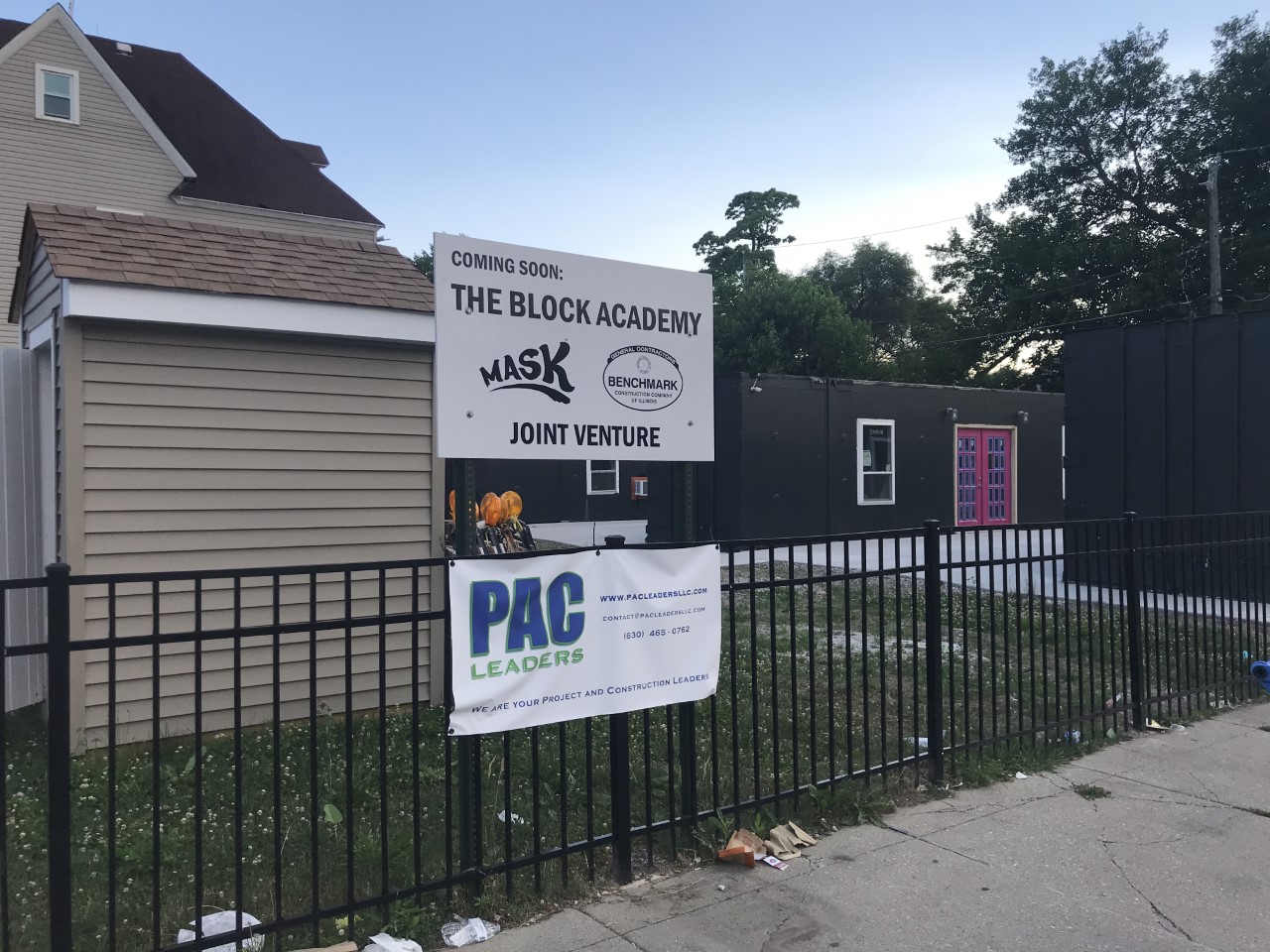
Until recently, the vacant lot at 75th Street and Stewart Avenue on Chicago’s South Side was full of weeds and trash, and it was marked by a history of violence. Now, with the help of the Cook County Land Bank Authority (CCLBA), the same lot is being transformed into a school and community resource center by a group of neighbors who have been fighting to end violence.
Since 2015, MASK (Mothers/ Men Against Senseless Killings) has occupied the corner of 75th and Stewart daily, grilling meals, playing music, and playing games as a way to prevent violence by building trust and community. In 2017, the Cook County Land Bank Authority donated a lot on the same block to MASK, establishing a permanent home for the group.
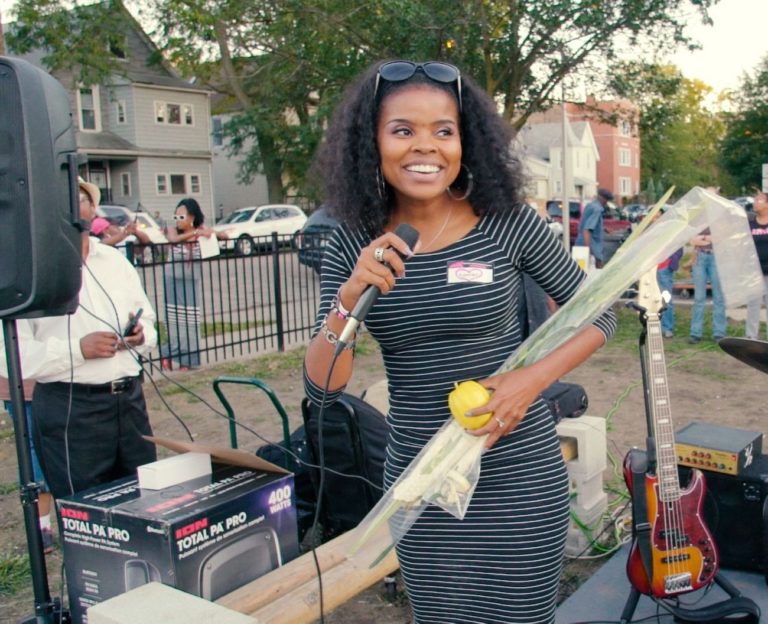
“Getting the deed from the Land Bank to the lot at 75th and Stewart allowed MASK to expand its work to combat violence and build community at the corner where we started in 2014, which was the site of the senseless and tragic murder of Lucille Barnes,” says Tamar Manasseh, founder of MASK. “We went from being squatters on the sidewalk with a couple of grills to pouring concrete and building our On The Block Academy.”
On the Block Academy is part of MASK’s work to create a safer environment by meeting residents’ basic needs, like child care, schooling, and food security. The project originally began two years ago to fill the vacuum created by the closing of a public high school. MASK built the school out of shipping containers on the lot acquired through CCLBA, and opened in March 2020 when the COVID-19 crisis hit and Chicago Public Schools switched to remote learning.
During the spring semester, the school helped essential workers who were suddenly without childcare and parents struggling to work from home while teaching their children.
This summer, MASK is focused on helping students who need reading and math instruction to prepare for the fall semester. MASK volunteers created a “study buddy” program that connects students to remote tutors and have secured 125 laptops. They are looking to obtain 200 more laptops and additional volunteer tutors.
As a volunteer-run organization with a small budget, donations and help from community resources like CCLBA are transformative for MASK.
“We believe in building communities block by block,” Manasseh says. “The Land Bank is in an ideal position to help with this work, taking a problem and turning it into a solution. We’re not developers, and we don’t have a lot of money. Finding another location for this community would have been impossible without their help.”
The Cook County Land Bank Authority is a unit of the Cook County government that works to turn vacant land and abandoned buildings into reliable and sustainable community assets. CCLBA relies on no tax dollars, rather it is funded primarily with grants, contributions, and revenues from transactions. It focuses especially on working with small development companies run by people of color and women.
“CCLBA advocates for community re-investment in a way that is consistent with the goals of local stakeholders like MASK,” says Robert Rose, executive director of the Cook County Land Bank Authority. “Projects like the transformation of the vacant lot at 75th Street and Stewart Avenue help reverse neighborhood despair and stabilize disinvested communities. By promoting the re-development and reuse of abandoned and vacant properties, we can reverse neighborhood despair and help build safer communities.”
On the Block Academy construction is scheduled to be complete by the end of 2020.
According to Manasseh, MASK plans to build more pop-up schools and other community assets as part of their continued fight against violence.
“Owning this property means we aren’t going anywhere,” Manasseh said. “We are here to stay. Instead of trash and weeds, the lot is a symbol of hope the community can see every day.”
August 6th, 2020|Categories: News Articles, News articles on CCLBA|Comments Off on Cook County Land Bank Authority Helps Englewood Mothers Fight Violence

A West Woodlawn native wants to right redlining wrongs with some greenlining — and he’s starting in the neighborhood where he grew up

By Darcel Rockett, Chicago Tribune  |  June 13th, 2020   (Click here for Original Article)
To fight the generations-spanning, discriminatory housing practice known as redlining with nine homes in a pocket of the South Side might seem, at first, like David going up against Goliath.
But Lamell McMorris has big plans for several lots in West Woodlawn, which he sees as one step toward building up the neighborhood where he grew up.
McMorris, a Washington, D.C.-based real estate developer and civil rights activist, has formed a new property redevelopment firm meant to right the wrongs of redlining, in partnership with the National Community Reinvestment Coalition.
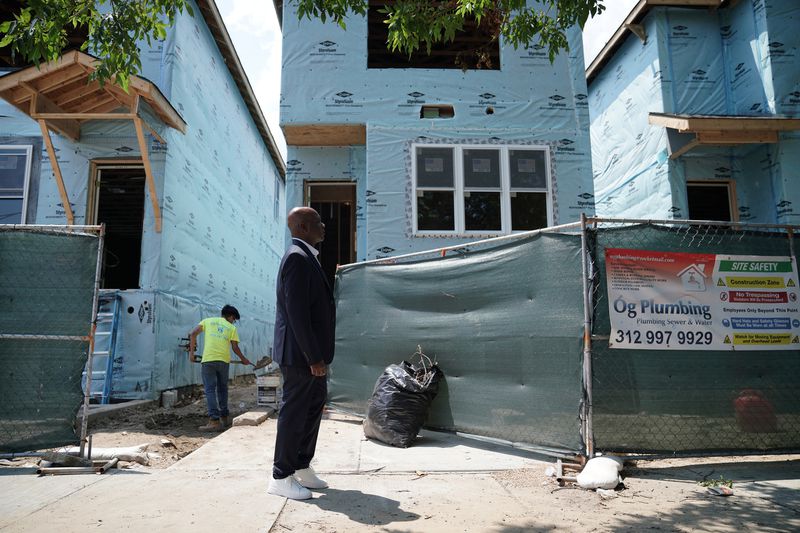
Chicago TribuneThe firm, Greenlining Realty USA, broke ground in late June on Woodlawn Pointe, a mix of new and rehabbed residential properties in the West Woodlawn area including seven new-construction and two renovated homes in a mix of single- and multi-family buildings.
McMorris said he hopes the quality housing Woodlawn Pointe provides will kick-start the investment his community needs to flourish and to reverse the impact that redlining left in its wake.
“Ours is not necessarily a challenge of gentrification; ours is reverse migration. I’ve got people moving out and I’m trying to get people to move back,” McMorris said.
McMorris’ endeavor comes at a time of increased awareness of redlining, a systemic practice where Black people were denied the ability to invest in property from 1933-1968. Real estate agents created color-coded maps of cities, where areas colored green were safest and red were riskiest.
The ongoing policy was a creation of governmental agencies like the Federal Housing Authority, working in conjunction with banks, appraisers and the real estate sector to deny mortgages or housing loans to those in the Black community.
Redlining enforced segregation and created a wealth gap that Blacks have yet to rebound from (and area organizations continue to propose solutions for), while whites could build wealth through equity in homes.
To McMorris, people are investing in parts of Woodlawn, but not his neighborhood on its west side. But its proximity to the lake, Hyde Park, the Dan Ryan and Lake Shore Drive make it ripe for growth.
There’s history there, and big plans for the future. “A Raisin in the Sun” playwright Lorraine Hansberry based the drama on her family’s experience in its Washington Park subdivision. Gwendolyn Brooks, Joe Louis and Hugh Hefner have called Woodlawn home, and the Obama Presidential Center is set to be built on Woodlawn’s portion of Jackson Park.
“Why would you not invest in West Woodlawn?” McMorris said.
Work on Woodlawn Pointe has already begun on Evans Avenue — seven lots acquired through the Cook County Land Bank Authority, an independent agency of Cook County that acquires vacant, abandoned and tax-delinquent properties and sells them at below-market rates. Buyers must be community-based developers who then rehab the properties and sell them to homeowners.
The new-construction homes should be done by fall, McMorris said. But that — along with a gut rehab of his childhood home at 742 E. Marquette Road — is just the start; he hopes to see a revitalized community within the decade.
For the Land Bank, this is the first project under its umbrella to involve multiple nearby homes being built or rehabbed at once, said Executive Director Rob Rose. Infill development — an urban renewal strategy focused on transforming vacant lots or other unused property — such as Woodlawn Pointe is exactly what the Land Bank hopes to promote.
“Infill development is something that is a real economic boost, because you’re building off the strength of a neighborhood,” Rose said. “That southwest quadrant of Woodlawn is ripe for this kind of development, and it provides for opportunity all the way around. So it’s something that we’re excited to be a part of.”
While federal regulations are supposed to ensure housing discrimination doesn’t exist, modern forms of redlining still reverberate through Chicago’s South and West sides. A recent WBEZ/City Bureau study found that from 2012 to 2018, 68.1% of money loaned for housing purchases in Chicago went to majority-white neighborhoods, while 8.1% went to majority-Black neighborhoods and 8.7% went to majority-Latino neighborhoods.
Homeowners in redlined neighborhoods in Chicago lost an average of $232,000 in home equity compared to those in greenlined neighborhoods over the past four decades, according to a June report from real estate brokerage Redfin. The median home equity for those in the “best” neighborhoods was $462,000. That’s a 101% difference in home equity between homes deemed “hazardous” and those deemed to be in the “best” neighborhoods.
The historic segregation still impacts the city’s neighborhoods, said Taylor Marr, Redfin’s lead economist. Even now, Black homeowners, the report found, are nearly five times more likely to own in previously redlined neighborhoods.
“In Chicago, in particular between 1960 and 2010, not a single neighborhood went from majority black to white,” he said. “Those neighborhood boundaries that were explicitly designed back in the ’30s, ’40s, and ’50s by race and segregated, essentially didn’t change at all.”
As for what can be done to right those wrongs, Marr said there has been a shift in awareness over the past five years and more effort to take action. But real impact, he noted, takes time.
“What we’re seeing more and more is that these things are very stable over time,” he said. “And it takes a significant group of efforts to really change the effects of the discrimination or even how cities are so segregated.”
Rose considers Woodlawn Pointe a way toward building neighborhood wealth in Woodlawn. For two- or three-flats being built, buyers could engage in what some call “house hacking” — living in one apartment while renting out the others to cover the cost of the building’s mortgage with a passive income.
“It’s a great way to turn real estate from a liability to an asset,” Rose said.
McMorris said he’s trying to put forth a blueprint for equity with his South Side project, creating strategies and opportunities for his neighbors who have historically been unable to participate in their environment as equity partners.
But it’s a constant battle, he said. In some cases, his team has to fight to show his West Woodlawn properties deserve the same high-quality finishes found in properties on the pricey North Shore.
“There shouldn’t be two sets of rules, two different standards — there should be one standard of good, quality housing,” McMorris said. “I’m attempting to do real work that says quality housing, quality development deserves to live, can live and is still profitable in this place that was once dismissed and disinvested in.”
It can feel like an uphill battle, but McMorris said he has a point to prove.
“I just have to do it and show people that it can be done and that my neighborhood deserves good housing product and inventory,” he said.
And he wants to make sure that when the developers do come knocking, they do it with intention.
“Anyone can come in my neighborhood and flip houses,” McMorris said, “but if you’re really trying to do a true neighborhood transformation, it takes an amount of leaning in that will lead to the outcome that is (the) real community that was around when I was a kid — livable, walkable and playable.”
July 13th, 2020|Categories: News Articles, News articles on CCLBA|Comments Off on A West Woodlawn native wants to right redlining wrongs with some greenlining — and he’s starting in the neighborhood where he grew up

Humboldt Park Developer Says Pandemic Is Right Time to Build Affordable Housing

Noticiero Bilingue Lawndale News  |  May 21st, 2020   (Click here for Original Article)
Now that COVID-19 has turned the world upside down, Luis Castro and his wife Marsha, co-owners of L&MC Investments, are determined now more than ever to pursue their mission of creating affordable housing in communities like Humboldt Park, Hermosa, Berwyn and East Garfield Park.
“This is the right time to create affordable housing for people,” said Luis Castro, president of L&MC investments, and a Humboldt Park resident. “With affordable housing, people might still be able to carry their mortgage and have a little bit left over.”
L&MC Investments is currently building 12 brand new affordable single-family homes in Humboldt Park through a partnership with the City of Chicago. And during the past five years, the company has also partnered with the Cook County Land Bank Authority to rehab vacant, abandoned properties. The company has rehabbed about five properties that it acquired from the Land Bank and is currently rehabbing a property in the Hermosa neighborhood. 
“The Land Bank helps make things affordable,” Castro said. “They’re easy to deal with, and we’re able to close deals a lot faster. These programs are important. Otherwise, everybody would be priced out. People who have been renting a long time in these areas deserve to have an affordable house.”
The Cook County Land Bank Authority acquires properties that have sat tax‐delinquent, abandoned and vacant for years and sells them at below‐market rates to qualified community‐based developers, who then rehab the properties. The Land Bank recently released 250 new abandoned properties for sale on its website: http://www.cookcountylandbank.org/.  In spite of the COVID-19 outbreak, the Land Bank is receiving more applications for its abandoned properties now – about 30 each day – from small developers like L&MC Investments than this time last year.
“Understandably, there’s a fair amount of trepidation among some small developers because of tighter lending criteria from banks, making it harder for small developers to get new loans to acquire property,” said Rob Rose, executive director of the Cook County Land Bank Authority.  “But many of our developer clients are optimistic that transactions can move forward. The pandemic is not slowing down rehabs or new applications for our properties.  For those small real estate developers who are well-capitalized, this economy presents a great opportunity to acquire property and revitalize communities.”
Castro said his company, which has redeveloped and built about 50 properties since its inception in 2007, will continue building up its rental pipeline and acquiring new properties for which they’ve already secured funding.
Although the pandemic has not slowed down Castro’s development work, it has impeded rent payments from some of his tenants.  He owns four rental buildings in Humboldt Park and Ukrainian Village.
 
“Some of my tenants have been laid off,” he said. “Some are behind paying rent. You have to be lenient with them. It’s a crisis. It’s not their fault. You can’t kick anybody when they’re down.”
In fact, Castro and his wife are finding ways to lift up their tenants and other people in their community. They’ll use a $5,000 grant they just received to buy toys for the children of their tenants who’ve been laid off, donate food to the Chicago Police Department’s Shakespeare District and homeless people in Humboldt Park and provide hand sanitizers and gloves to senior citizens.
Castro said that because both he and his wife grew up in working-class households, they are committed to giving back to their community. 
“We didn’t have the bells and whistles,” he recalled. “Our parents lived from paycheck to paycheck. We always said if we could, we’d give back. Affordable housing is really a way to give back.”
May 22nd, 2020|Categories: News Articles, News articles on CCLBA|Comments Off on Humboldt Park Developer Says Pandemic Is Right Time to Build Affordable Housing
X